11 GDPR Checks to Run Before Sending B2B Cold Email


GDPR-compliant cold email to business contacts is permitted when it rests on a defensible lawful basis, most often legitimate interest, and follows the national ePrivacy rules that govern the recipient’s country. Before any campaign sends, marketers need a purpose-specific Legitimate Interest Assessment, a check of jurisdictional transmission rules, and a visible sender identity with an easy opt-out in every message.
TL;DR:
Sending GDPR-compliant cold emails requires a documented Legitimate Interest Assessment, specific purpose, necessity, and balancing tests, plus visible sender identity and opt-out options.
National ePrivacy laws can still demand consent for transmissions, especially for sole traders or individuals, even when GDPR lawful basis is met.
Marketers must segment contacts by country and legal status, applying consent rules automatically for individuals and rechecking restrictions when entering new markets.
Pre-send routines should include detailed documentation, source verification, transparency, and immediate pause on complaints to ensure compliance and protect reputation.
High complaint rates, hiding sender identity, ignoring opt-out requests, or using unverified lists are the main triggers for enforcement actions and reputational damage.
KingpinReach Relevant Retail BuyersKingpin helps consumer brands build buyer relationships globally, with an AI-powered wholesale team that does the work.Explore Kingpin
Table of Contents
How GDPR’s lawful bases apply to cold email
Why ePrivacy rules can be stricter than GDPR
Pre-send checklist and message-level controls
Common myths and what actually triggers enforcement
Practitioner templates for documentation and message copy
Why privacy-first outreach is a better growth strategy
Kingpin: a managed alternative for B2B outreach
FAQ
Sources
How GDPR’s lawful bases apply to cold email
Article 6(1)(f) of the GDPR allows processing personal data, including a business contact’s name and email address, when a controller has a legitimate interest that is not overridden by the individual’s rights. B2B prospecting is plausibly covered here, because a reasonable business contact would expect relevant commercial outreach tied to their professional role. That plausibility has to be documented, not assumed.
The EDPB’s guidance on legitimate interest sets out three tests that a Legitimate Interest Assessment must pass:
Purpose test: state the specific commercial reason for the outreach, not a generic marketing goal.
Necessity test: show that processing this contact’s data is needed to achieve that purpose, with no less intrusive option available.
Balancing test: weigh the business interest against the contact’s rights and reasonable expectations, including their role and the context in which their data was found.
The EDPB’s 2024 guidelines on Article 6(1)(f) require a detailed three-part balancing exercise, and note that national ePrivacy rules can still demand consent even when the GDPR balancing test is satisfied. That second part matters: a passed LIA is not the end of the analysis.
Recipients also hold an absolute right to object to marketing processing under Article 21(2) of the GDPR, free of charge, with no justification required. Once a contact objects, the controller must stop processing their data for marketing immediately. Build the LIA to be specific to one campaign rather than a blanket company-wide document, and keep it on file as evidence if a regulator or recipient ever asks why you processed their data.
Why ePrivacy rules can be stricter than GDPR
The GDPR governs how you process personal data; national ePrivacy laws govern how you are allowed to send the message itself, and the two do not always align. A passed LIA addresses processing, not transmission, so a second check against the recipient’s country is still required.
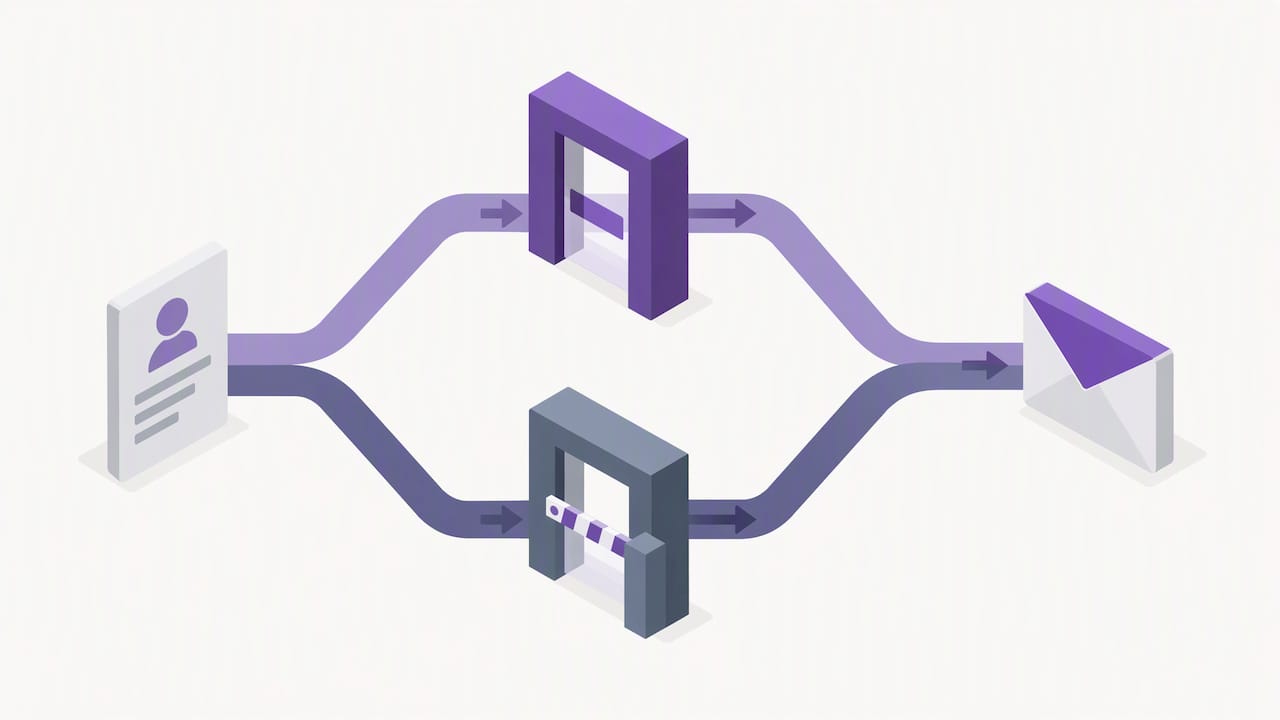
The UK’s PECR illustrates the gap well: corporate subscribers (limited companies, most partnerships) can generally be emailed without prior consent for relevant business marketing, but sole traders and some unincorporated partnerships are treated as individuals, who typically require consent or a valid soft opt-in. France’s data protection authority, by contrast, has taken a more permissive view of legitimate interest for B2B professional communications in some contexts, according to commentary submitted during the EDPB’s consultation. National transpositions of the ePrivacy Directive vary enough that a one-size list strategy across Europe is risky.
The practical fix is segmentation:
Tag each contact by country and by legal status (corporate subscriber versus sole trader or individual).
Apply consent-based rules automatically to any contact flagged as an individual or sole trader.
Re-check this mapping whenever you expand into a new market, since transposition details differ by member state.
Pre-send checklist and message-level controls
A short pre-send routine catches most compliance gaps before they become complaints. Run through this before any new campaign goes out:
Draft a campaign-specific LIA covering purpose, necessity, and balancing, and date it.
Log the data source for every contact: where it came from, when, and by what method.
Confirm necessity and minimization: only collect and use the fields the campaign actually needs.
Avoid bought-in lists where provenance cannot be verified; prefer addresses sourced from company websites, public business directories, or prior professional contact.
Check sender transparency: the From address should match a real sending domain and identify your organization clearly.
Add a one-line purpose statement early in the message explaining why the recipient is being contacted.
Include a prominent opt-out, either an unsubscribe link or a clear reply-to instruction.
Keep message content free of heavy profiling; reference the recipient’s role or company, not inferred personal behavior.
Wire suppression to your CRM so an opt-out or objection blocks re-contact immediately and permanently.
Set a retention and deletion schedule for contacts who never respond.
Send a small test batch first and watch complaint rates before scaling to the full list.
Pro Tip: Pause any campaign the moment complaint rates climb, investigate the list source before resuming, since a spike almost always traces back to a bought-in or poorly segmented list.
Common myths and what actually triggers enforcement
A few assumptions keep tripping up otherwise careful teams. “The email is publicly listed, so I can use it freely” ignores that publication does not grant a marketing lawful basis. “Legitimate interest always covers B2B” ignores that national ePrivacy rules can still require consent regardless of the GDPR balancing test. “An opt-out after the first send is enough” ignores that the opt-out needs to be visible and actionable from message one, not added retroactively.
What regulators and recipients actually react to is more concrete:
Hiding the sender’s real identity or using a disposable domain.
Ignoring opt-out requests or making them hard to find.
Sending in bulk to a purchased or scraped list with no provenance record.
Being unable to produce an LIA or source log when asked.
Running a campaign with a persistently high complaint rate.
ICO guidance treats transparency and easy opt-out as the clearest signals of good-faith outreach, and their absence as the fastest route to a complaint. High complaint rates and spam-trap hits also degrade inbox placement, which turns a compliance problem into a deliverability one almost overnight.
Practitioner templates for documentation and message copy
Keep the LIA as a living, short document rather than a legal essay. A workable template covers five fields: purpose (why this campaign exists), necessity rationale (why this data and this channel), balancing notes (what the recipient would reasonably expect), safeguards (minimization, suppression, retention limits), and a review date.
Two micro-copy patterns cover most of the message-level requirements:
A transparency line near the top: “I’m reaching out because [company] works with [role/industry], and this is a one-time message about [specific purpose].”
A footer opt-out line: “If this isn’t relevant, reply ‘no thanks’ or use the unsubscribe link below and we won’t contact you again.”
Pair this with ICO’s business-to-business guidance, which confirms that even where PECR does not apply to a corporate subscriber, the underlying personal data processing still falls under UK GDPR, so objections and lawful-basis records still matter. For teams further along in building a documented process, this practical B2B compliance guide and this step-by-step implementation checklist are useful references for structuring audit-ready records.
Objection timestamps and the handler who processed them belong in the same system as your suppression list, not in a separate spreadsheet someone checks once a quarter.
Why privacy-first outreach is a better growth strategy
Respecting opt-outs isn’t a compliance tax, it’s a filter that leaves you talking to people who actually want to hear from you. Teams that document their LIAs and honor objections quickly tend to protect their sender reputation and avoid the deliverability spiral that follows ignored complaints. Treat compliance as the foundation of a pipeline you can build on for years, not a brake on this quarter’s numbers.
Kingpin: a managed alternative for B2B outreach
Building and maintaining LIAs, suppression lists, and source-of-data records across every campaign takes real operational discipline. Kingpin’s AI-powered wholesale team takes buyer targeting and outreach off a brand’s team.
Kingpin handles buyer targeting, outreach, and relationship management for consumer brands. A research agent finds the retailers that fit the brand in every market, with the reason for each one, and brands keep full ownership of every buyer relationship. The service has one monthly fee on every plan, set on the strategy call, with 0% commission. Brands that want the work handled for them can start a conversation at Kingpin.
This article is general information, not a substitute for advice from a qualified lawyer. Consult a qualified legal professional about your own circumstances before acting on anything here.
FAQ
What is the 30/30/50 rule for cold emails?
This is a deliverability and copywriting heuristic used by some outreach practitioners, not a legal or GDPR requirement, and definitions of it vary across marketing sources. GDPR and ePrivacy compliance depend on lawful basis, transparency, and opt-out handling, not on this kind of message-structure formula.
What are the GDPR rules for email addresses?
An email address tied to an identifiable person is personal data, so collecting and using it for cold outreach requires a lawful basis, most often a documented legitimate interest assessment for B2B contacts. Recipients retain the right to object under Article 21(2) of the GDPR, and that objection must be honored immediately.
What are the legal regulations for cold email?
Cold email sits at the intersection of the GDPR, which governs data processing, and national ePrivacy laws, which govern the transmission of the message itself. The UK’s PECR and similar national rules elsewhere can require consent for certain recipient types, such as sole traders, even when a GDPR legitimate interest basis would otherwise apply.
Are cold emails illegal?
Cold emails are not automatically illegal, but sending them without a valid lawful basis, a clear sender identity, and a working opt-out puts you at risk under both GDPR and national ePrivacy rules. Country-specific treatment of sole traders versus corporate subscribers, as outlined in guidance on soft opt-in rules for Ireland, shows why the answer depends on where the recipient is based.
Does legitimate interest always cover B2B cold email?
No, a passed Legitimate Interest Assessment addresses the GDPR processing question, but national ePrivacy transpositions can still require consent for the transmission itself. Marketers need to check both the GDPR lawful basis and the recipient’s country-specific ePrivacy rules before sending.
Sources
GDPR-compliant cold email to business contacts is permitted when it rests on a defensible lawful basis, most often legitimate interest, and follows the national ePrivacy rules that govern the recipient’s country. Before any campaign sends, marketers need a purpose-specific Legitimate Interest Assessment, a check of jurisdictional transmission rules, and a visible sender identity with an easy opt-out in every message.
TL;DR:
Sending GDPR-compliant cold emails requires a documented Legitimate Interest Assessment, specific purpose, necessity, and balancing tests, plus visible sender identity and opt-out options.
National ePrivacy laws can still demand consent for transmissions, especially for sole traders or individuals, even when GDPR lawful basis is met.
Marketers must segment contacts by country and legal status, applying consent rules automatically for individuals and rechecking restrictions when entering new markets.
Pre-send routines should include detailed documentation, source verification, transparency, and immediate pause on complaints to ensure compliance and protect reputation.
High complaint rates, hiding sender identity, ignoring opt-out requests, or using unverified lists are the main triggers for enforcement actions and reputational damage.
KingpinReach Relevant Retail BuyersKingpin helps consumer brands build buyer relationships globally, with an AI-powered wholesale team that does the work.Explore Kingpin
Table of Contents
How GDPR’s lawful bases apply to cold email
Why ePrivacy rules can be stricter than GDPR
Pre-send checklist and message-level controls
Common myths and what actually triggers enforcement
Practitioner templates for documentation and message copy
Why privacy-first outreach is a better growth strategy
Kingpin: a managed alternative for B2B outreach
FAQ
Sources
How GDPR’s lawful bases apply to cold email
Article 6(1)(f) of the GDPR allows processing personal data, including a business contact’s name and email address, when a controller has a legitimate interest that is not overridden by the individual’s rights. B2B prospecting is plausibly covered here, because a reasonable business contact would expect relevant commercial outreach tied to their professional role. That plausibility has to be documented, not assumed.
The EDPB’s guidance on legitimate interest sets out three tests that a Legitimate Interest Assessment must pass:
Purpose test: state the specific commercial reason for the outreach, not a generic marketing goal.
Necessity test: show that processing this contact’s data is needed to achieve that purpose, with no less intrusive option available.
Balancing test: weigh the business interest against the contact’s rights and reasonable expectations, including their role and the context in which their data was found.
The EDPB’s 2024 guidelines on Article 6(1)(f) require a detailed three-part balancing exercise, and note that national ePrivacy rules can still demand consent even when the GDPR balancing test is satisfied. That second part matters: a passed LIA is not the end of the analysis.
Recipients also hold an absolute right to object to marketing processing under Article 21(2) of the GDPR, free of charge, with no justification required. Once a contact objects, the controller must stop processing their data for marketing immediately. Build the LIA to be specific to one campaign rather than a blanket company-wide document, and keep it on file as evidence if a regulator or recipient ever asks why you processed their data.
Why ePrivacy rules can be stricter than GDPR
The GDPR governs how you process personal data; national ePrivacy laws govern how you are allowed to send the message itself, and the two do not always align. A passed LIA addresses processing, not transmission, so a second check against the recipient’s country is still required.
The UK’s PECR illustrates the gap well: corporate subscribers (limited companies, most partnerships) can generally be emailed without prior consent for relevant business marketing, but sole traders and some unincorporated partnerships are treated as individuals, who typically require consent or a valid soft opt-in. France’s data protection authority, by contrast, has taken a more permissive view of legitimate interest for B2B professional communications in some contexts, according to commentary submitted during the EDPB’s consultation. National transpositions of the ePrivacy Directive vary enough that a one-size list strategy across Europe is risky.
The practical fix is segmentation:
Tag each contact by country and by legal status (corporate subscriber versus sole trader or individual).
Apply consent-based rules automatically to any contact flagged as an individual or sole trader.
Re-check this mapping whenever you expand into a new market, since transposition details differ by member state.
Pre-send checklist and message-level controls
A short pre-send routine catches most compliance gaps before they become complaints. Run through this before any new campaign goes out:
Draft a campaign-specific LIA covering purpose, necessity, and balancing, and date it.
Log the data source for every contact: where it came from, when, and by what method.
Confirm necessity and minimization: only collect and use the fields the campaign actually needs.
Avoid bought-in lists where provenance cannot be verified; prefer addresses sourced from company websites, public business directories, or prior professional contact.
Check sender transparency: the From address should match a real sending domain and identify your organization clearly.
Add a one-line purpose statement early in the message explaining why the recipient is being contacted.
Include a prominent opt-out, either an unsubscribe link or a clear reply-to instruction.
Keep message content free of heavy profiling; reference the recipient’s role or company, not inferred personal behavior.
Wire suppression to your CRM so an opt-out or objection blocks re-contact immediately and permanently.
Set a retention and deletion schedule for contacts who never respond.
Send a small test batch first and watch complaint rates before scaling to the full list.
Pro Tip: Pause any campaign the moment complaint rates climb, investigate the list source before resuming, since a spike almost always traces back to a bought-in or poorly segmented list.
Common myths and what actually triggers enforcement
A few assumptions keep tripping up otherwise careful teams. “The email is publicly listed, so I can use it freely” ignores that publication does not grant a marketing lawful basis. “Legitimate interest always covers B2B” ignores that national ePrivacy rules can still require consent regardless of the GDPR balancing test. “An opt-out after the first send is enough” ignores that the opt-out needs to be visible and actionable from message one, not added retroactively.
What regulators and recipients actually react to is more concrete:
Hiding the sender’s real identity or using a disposable domain.
Ignoring opt-out requests or making them hard to find.
Sending in bulk to a purchased or scraped list with no provenance record.
Being unable to produce an LIA or source log when asked.
Running a campaign with a persistently high complaint rate.
ICO guidance treats transparency and easy opt-out as the clearest signals of good-faith outreach, and their absence as the fastest route to a complaint. High complaint rates and spam-trap hits also degrade inbox placement, which turns a compliance problem into a deliverability one almost overnight.
Practitioner templates for documentation and message copy
Keep the LIA as a living, short document rather than a legal essay. A workable template covers five fields: purpose (why this campaign exists), necessity rationale (why this data and this channel), balancing notes (what the recipient would reasonably expect), safeguards (minimization, suppression, retention limits), and a review date.
Two micro-copy patterns cover most of the message-level requirements:
A transparency line near the top: “I’m reaching out because [company] works with [role/industry], and this is a one-time message about [specific purpose].”
A footer opt-out line: “If this isn’t relevant, reply ‘no thanks’ or use the unsubscribe link below and we won’t contact you again.”
Pair this with ICO’s business-to-business guidance, which confirms that even where PECR does not apply to a corporate subscriber, the underlying personal data processing still falls under UK GDPR, so objections and lawful-basis records still matter. For teams further along in building a documented process, this practical B2B compliance guide and this step-by-step implementation checklist are useful references for structuring audit-ready records.
Objection timestamps and the handler who processed them belong in the same system as your suppression list, not in a separate spreadsheet someone checks once a quarter.
Why privacy-first outreach is a better growth strategy
Respecting opt-outs isn’t a compliance tax, it’s a filter that leaves you talking to people who actually want to hear from you. Teams that document their LIAs and honor objections quickly tend to protect their sender reputation and avoid the deliverability spiral that follows ignored complaints. Treat compliance as the foundation of a pipeline you can build on for years, not a brake on this quarter’s numbers.
Kingpin: a managed alternative for B2B outreach
Building and maintaining LIAs, suppression lists, and source-of-data records across every campaign takes real operational discipline. Kingpin’s AI-powered wholesale team takes buyer targeting and outreach off a brand’s team.
Kingpin handles buyer targeting, outreach, and relationship management for consumer brands. A research agent finds the retailers that fit the brand in every market, with the reason for each one, and brands keep full ownership of every buyer relationship. The service has one monthly fee on every plan, set on the strategy call, with 0% commission. Brands that want the work handled for them can start a conversation at Kingpin.
This article is general information, not a substitute for advice from a qualified lawyer. Consult a qualified legal professional about your own circumstances before acting on anything here.
FAQ
What is the 30/30/50 rule for cold emails?
This is a deliverability and copywriting heuristic used by some outreach practitioners, not a legal or GDPR requirement, and definitions of it vary across marketing sources. GDPR and ePrivacy compliance depend on lawful basis, transparency, and opt-out handling, not on this kind of message-structure formula.
What are the GDPR rules for email addresses?
An email address tied to an identifiable person is personal data, so collecting and using it for cold outreach requires a lawful basis, most often a documented legitimate interest assessment for B2B contacts. Recipients retain the right to object under Article 21(2) of the GDPR, and that objection must be honored immediately.
What are the legal regulations for cold email?
Cold email sits at the intersection of the GDPR, which governs data processing, and national ePrivacy laws, which govern the transmission of the message itself. The UK’s PECR and similar national rules elsewhere can require consent for certain recipient types, such as sole traders, even when a GDPR legitimate interest basis would otherwise apply.
Are cold emails illegal?
Cold emails are not automatically illegal, but sending them without a valid lawful basis, a clear sender identity, and a working opt-out puts you at risk under both GDPR and national ePrivacy rules. Country-specific treatment of sole traders versus corporate subscribers, as outlined in guidance on soft opt-in rules for Ireland, shows why the answer depends on where the recipient is based.
Does legitimate interest always cover B2B cold email?
No, a passed Legitimate Interest Assessment addresses the GDPR processing question, but national ePrivacy transpositions can still require consent for the transmission itself. Marketers need to check both the GDPR lawful basis and the recipient’s country-specific ePrivacy rules before sending.
Sources
About The Author

Ysabella Louise
Hi, I'm Ysabella, PMM at Kingpin. We believe that growing revenue shouldn't be a challenge, it should be a no-brainer. So sales teams can focus less on the struggle and more on the wins. I'm here to make sure that vision comes through in every story we tell, and to share what's working, what's changing, and what you should actually know to sell smarter.