Wholesale Outreach Strategy: How to Reach Retail Buyers

A wholesale outreach strategy is a repeatable system for finding retailers that fit your product, contacting the right buyer with a relevant offer, and following up until you get a yes or a clear no. The brands that win do not send the most emails. They send the most relevant ones, at the right moment in the buyer’s calendar, with a request that is easy to grant.
This guide walks through that system step by step: who to target, how to contact retail buyers, what to write, how many touches to plan, what the law requires, and how to measure results.
KingpinReach the Retail Buyers Who FitKingpin’s AI-powered wholesale team finds retailers that fit your brand and reaches their buyers in their language. Every buyer relationship stays with your brand.Explore Kingpin
TL;DR
Targeting beats volume. Thirty researched retailers outperform 300 scraped contacts, so build a tight list by store type, price point and current assortment.
Lead with a small ask, such as a line sheet or a short call, and give the buyer a reason to reply: sell-through data, a gap in their category, or new press.
Plan three to four touchpoints over two to three weeks, each adding something new, and respect buyers’ category review calendars.
Keep every message compliant with CAN-SPAM, track reply and meeting rates, and treat each campaign as a test.
Own the relationship. Whoever runs your outreach, the buyer data, the conversations and the orders should stay yours.
Table of Contents
Why most wholesale outreach gets ignored
Step 1: Define the retailers that actually fit
Step 2: Learn how to contact retail buyers
Step 3: Write a message a buyer will answer
Step 4: Plan the cadence and the follow-ups
Step 5: Stay compliant
Step 6: Measure and improve
What this looks like in practice
Our perspective: outreach is a data problem first
Doing it yourself, or getting help
A 30-day launch plan
Common mistakes to avoid
FAQ
Sources
Why most wholesale outreach gets ignored
Buyers at specialty shops, department stores and grocery chains receive far more pitches than they can read. Most of those pitches look alike: a generic introduction, an attached catalog, a request for a meeting. Nothing in them explains why this brand belongs in this store.
The numbers confirm how hard the inbox is. One playbook for DTC brands puts typical reply rates for wholesale outreach at 2% to 5%, with meeting rates of 0.5% to 1.5% per campaign. Broader B2B cold email benchmarks land in a similar 1% to 5% reply range, depending on targeting quality and message relevance. On a list of 100 retailers, that is a handful of replies and perhaps one meeting. The only way to move those figures is to improve who you contact and what you say.
Kingpin has written about the same pattern from the inside: outreach gets ignored when it lacks context about the buyer’s store, shoppers and assortment. Our post on why most wholesale outreach gets ignored covers what changes when context leads the message.
Step 1: Define the retailers that actually fit
Start with fit, not category. “Gift shops” or “boutiques” is too broad to act on. A useful target definition combines three things:
Store type. Independent specialty, regional chain, department store, online-only retailer, hotel or spa shop. Each buys differently and has a different minimum order tolerance.
Price point. A store whose shelf runs between $30 and $80 will see a $12 item as a different customer’s product, and vice versa. Segmenting by store type, price point and current assortment converts far better than generic list building, according to the same playbook.
Current assortment. Look at which competing or adjacent brands the store already carries. A retailer stocking three brands close to yours has proven demand for the category. A retailer with none may have no appetite for it.
Then write a one-line description of your ideal retailer, for example: “independent skincare boutiques in the US Northeast, carrying clean-beauty brands, average item price $35 to $70.” If a store does not match that sentence, it does not go on the list.
Build the list in layers
Seed the list from places where fit is visible: stockist pages of brands similar to yours, retailer websites, marketplaces, and your own customer data. Zip codes with strong direct-to-consumer sales are a useful signal, because a retailer in a city where you already have customers needs less convincing.
Then add buyer names and verified contact details. A generic info@ address reaches a shared inbox. A named buyer or category manager reaches a person who can say yes. This research is the slowest part of outreach, and it is the part that determines results.
Step 2: Learn how to contact retail buyers
The channel matters less than the relevance, but each has a role.
Email is the default. It is easy to personalize, easy to measure and easy for the buyer to forward internally.
LinkedIn works for larger retailers, where the buyer’s title and category are public. A short note referencing their category is enough; save the pitch for email.
Phone works for independent shops, where the owner is also the buyer. Calling during a quiet part of the day often gets a faster answer than an email that sits unread.
Samples and in-person visits build on a first contact rather than replace it. A sample sent to a buyer who has asked for one converts far better than a box sent cold.
Trade shows still matter in some categories, but they are expensive and tied to fixed dates. Many brands now use them to meet buyers they have already contacted, not to find new ones.
Respect the buyer’s calendar
Large retailers decide assortment in planned cycles. Category reviews are the process in which buyers assess sales, profitability and customer trends in a category to decide what stays, goes or enters. Those calendars are often public or easy to learn through a first conversation.
If a retailer is between cycles, Shopify’s retail guide suggests using the time to build the relationship instead of pushing for a meeting the buyer cannot grant. In practice, that means asking when the next review opens, what the buyer wants to see, and what format they prefer. Then you arrive on time with the right materials.
Step 3: Write a message a buyer will answer
A strong first message is short, specific and easy to answer. It has four parts.
A reason you chose them. One sentence showing you looked at their store: a product they carry, a customer they serve, a gap in their assortment.
A reason to care. One or two facts that matter to a retailer: your retail markup, sell-through at existing stockists, direct-to-consumer demand in their region, or recent press.
A small ask. Offer a line sheet, not a 30-minute meeting. A line sheet request is easier to say yes to, and it opens the conversation.
An easy next step. One question the buyer can answer in a sentence.
Get Wholesale Orders recommends pitches of around 100 words and a full cadence of follow-ups. A short message signals respect for the buyer’s time.
Here is the shape of a good first email, written in plain language:
Subject: Your clean-beauty shelf and a brand your customers already search for
Hi Dana, I saw your shop carries three brands in the $35 to $60 range for sensitive skin. We make a fragrance-free barrier serum that sells at $48 retail with a 55% margin to stores, and it has sold through at several independent shops in the region. Can I send you our line sheet and wholesale terms?
It is brief, it names the retailer’s own assortment, and it asks for something small. The bracket of facts, margin and sell-through, is what turns a pitch into a business case.
Selling a partnership, not a product
Experts quoted by Shopify stress that retail pitching is relationship-based: founders should sell a long-term partnership, because retailers prioritize suppliers who are reliable and can help fix a declining category or grow a strong one. That framing should show in your terms as well as your copy: clear minimums, dependable lead times, reorder support and marketing assets the store can use.
Putting terms on paper builds the same trust. If you are drafting supplier or wholesale terms, templates such as these supplier agreement templates for South African businesses show what a written supplier relationship covers. Note they are designed for South African law, so US brands should have terms reviewed by a local attorney.
Step 4: Plan the cadence and the follow-ups
Most replies come after the first email, not to it. A cadence of three to four touchpoints over two to three weeks is a reasonable pattern for wholesale, with each message adding value rather than repeating the first. The same source cautions against empty “just checking in” notes.
A workable sequence looks like this:
Touch | Timing | What it adds |
|---|---|---|
1. First email | Day 1 | Fit, key numbers, line sheet offer |
2. Follow-up | Day 4 to 5 | A relevant result: sell-through, a customer review, a seasonal angle |
3. Different channel | Day 9 to 10 | A short LinkedIn note or a phone call |
4. Final note | Day 14 to 16 | New press, a launch, or a clear close: “should I check back next quarter?” |
Stop when the buyer says no, and note the reason. “Not now, we review in January” is a lead, not a rejection. Put a reminder in your CRM for the date they gave you.
Step 5: Stay compliant
B2B email is not exempt from the law. The FTC explains that CAN-SPAM covers all commercial messages, not just bulk email, which includes messages sent to business contacts. The guide lists the basics: accurate header information, clear identification of the message as an ad, a valid physical postal address, and a working way to opt out. The FTC also publishes answers to common CAN-SPAM questions if you are unsure how it applies to your sequences.
Honor opt-outs promptly and keep a suppression list. If you sell outside the US, check the rules for each market before you send, as they differ by country. For specific legal questions, talk to an attorney who handles commercial email.
Step 6: Measure and improve
Treat each batch of 50 to 100 retailers as an experiment. Track four numbers:
Delivery and open rate: tells you whether your list and sending setup are healthy.
Reply rate: the most reliable sign that your message is relevant. The benchmarks above, 2% to 5%, give you a baseline.
Meeting or line sheet request rate: shows whether the ask is right.
First order rate and order value: the only numbers that matter in the end.
Change one variable at a time: the segment, the subject line, the proof point or the ask. After three or four batches, you will know which store types respond and which to drop.
What this looks like in practice
Our perspective: outreach is a data problem first
We see the same mistake across consumer brands. A founder spends a week writing a beautiful email and ten minutes choosing who gets it. It should be the other way around. The message matters, but the list decides whether any message works.
That is why Kingpin’s research agent finds the retailers that fit your brand in every market, with the reason for each one. Your brand approves which retailers to go after, and your account manager reviews every list and message. Our experience includes $700M+ in wholesale GMV since 2021, with 3,500+ retailers on Kingpin.
We also believe brands should own what they build. Every buyer relationship stays with the brand, and we charge 0% commission. Kingpin sets it up and manages it: there is no platform or software for your team to learn or run. Your account manager from your category sets the strategy and is your single point of contact.
Our advice, whether you use us or run outreach yourself: pick fewer retailers, learn more about each, ask for less in the first message, and follow up with something useful.
Doing it yourself, or getting help
A small brand can run this process alone. It takes time: researching buyers, writing, tracking follow-ups and keeping a pipeline up to date. Many founders find that this work competes with product, production and customer service, and it slips.
There are three common routes. Hiring a traditional sales agent brings an existing network but usually commissions and slower starts. Trade shows give face time with buyers but have high fixed costs. A managed, data-led service handles research and outreach for a predictable fee. Which is right depends on your margin, your category and how much time you can spend.
If you want a managed route, Kingpin has one monthly fee on every plan, set on the strategy call, with 0% commission. Six AI employees, run by an account manager from your category, find retailers that fit, reach their buyers in their language, keep existing accounts warm and follow up on reorders all year. Kingpin sets it up and manages it, so there is no software for your team to run. For a strategy call, bring three shops you sell to and see the next ones that look like them.
A 30-day launch plan
Week 1: Define and build. Write your ideal retailer in one sentence. Gather 30 to 50 matching stores. Find the buyer’s name and a verified email for each. Prepare a one-page line sheet with wholesale price, retail price, minimum order and lead time.
Week 2: Send and observe. Send your first message to the first 20 to 30 on the list. Log opens and replies. Respond to every reply within a day.
Week 3: Follow up. Send the second and third touches with fresh proof: a result, a review, a seasonal reason. Make calls to independents that have not replied.
Week 4: Review and adjust. Count replies, line sheet requests and meetings. Look at which store types answered. Rewrite the message for the strongest segment and send the next batch.
At the end of the month, you will have a tested message, a clear picture of your best segment, and the beginnings of a pipeline.
Common mistakes to avoid
Buying a giant list. Size feels productive, but untargeted contacts cost time, damage your sending reputation and rarely convert.
Pitching during the wrong window. Asking a large retailer for a meeting in the middle of a closed review cycle wastes a good first impression.
Leading with your story instead of their numbers. Buyers care about margin, turn and fit. Your founding story helps later.
Giving up after one email. Most replies come from follow-ups that add something new.
Losing the data. Notes about who said what and when are an asset. Keep them in a CRM you control, so that any change in your team or tools does not reset your relationships.
FAQ
How do I contact retail buyers if I do not have a name?
Check the retailer’s website, LinkedIn, trade directories and the brand pages of stores you admire for the title of category manager or buyer. For independent shops, the owner is usually the buyer, and a short call to the store can confirm who handles new brands. Avoid sending to a generic address unless nothing else is available.
How many retailers should I contact at once?
Start with 30 to 50 well-matched retailers, rather than hundreds. Research suggests that a small researched list outperforms a large scraped one. Send in batches of 20 to 30 so you can learn and adjust.
How often should I follow up?
Plan three to four touches over two to three weeks, with several days between each. Give each follow-up a new reason to read it, such as sell-through results or a new retailer. Stop when the buyer declines or asks you to check back later, and record the date.
Is cold email to retailers legal in the US?
Yes, if it follows CAN-SPAM. The FTC says the law applies to B2B email too, so include accurate sender information, your physical address and a working opt-out, and honor opt-outs quickly. For anything unclear, ask an attorney.
Sources
About The Author
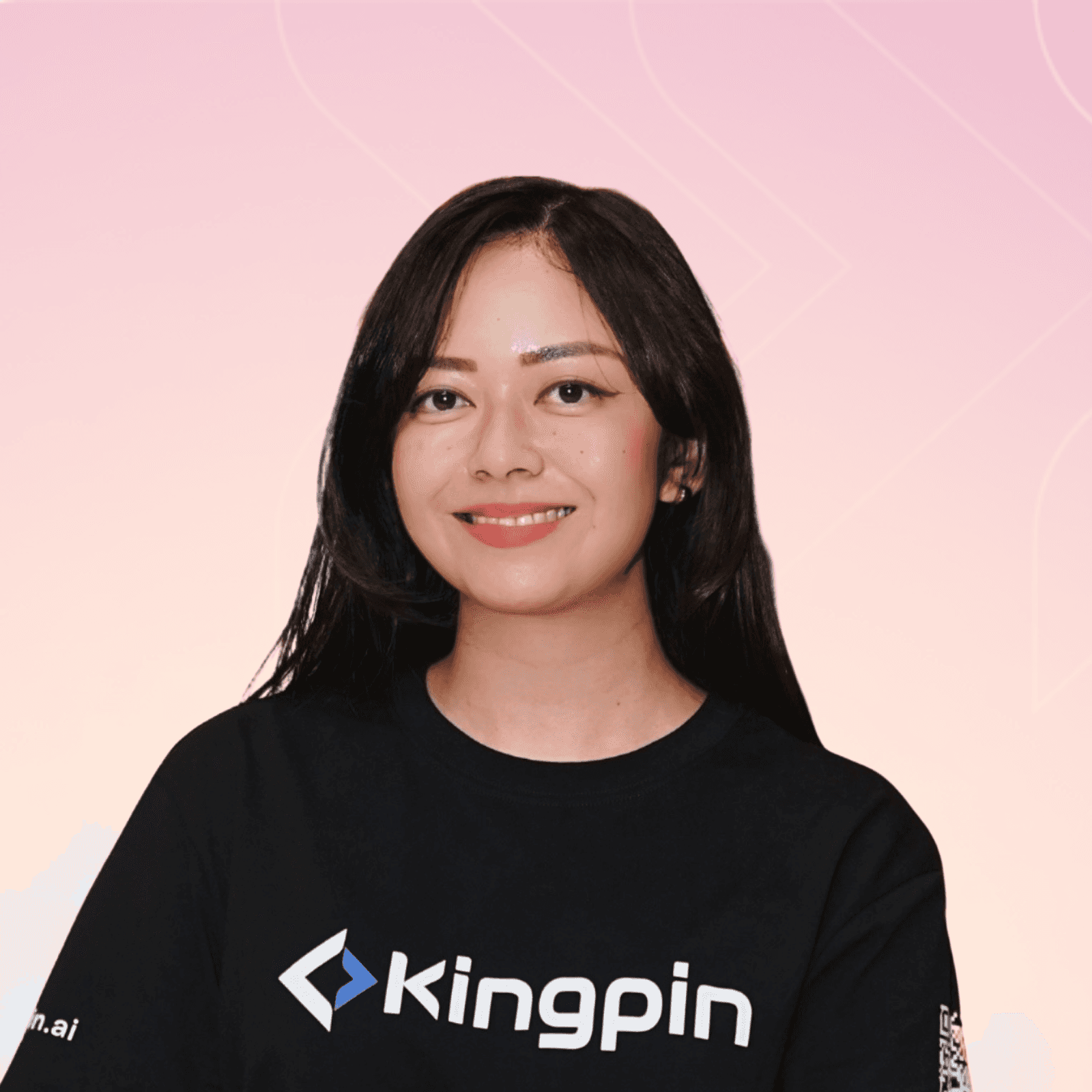
Ysabella Louise
Hi, I'm Ysabella, PMM at Kingpin. We believe that growing revenue shouldn't be a challenge, it should be a no-brainer. So sales teams can focus less on the struggle and more on the wins. I'm here to make sure that vision comes through in every story we tell, and to share what's working, what's changing, and what you should actually know to sell smarter.