Why Most Wholesale Outreach Gets Ignored (And How Context Changes Everything)
Why Most Wholesale Outreach Gets Ignored (And How Context Changes Everything)
Key Takeaways
✓ Most wholesale outreach fails because it's written for the sender's convenience, not the buyer's relevance
✓ Context is the difference between a reply and silence. Buyers respond when outreach references what they actually care about
✓ Three elements make outreach contextual: Who the buyer is, what they carry, and why your brand fits their assortment specifically
✓ AI contextual messaging makes personalization scalable without writing every email from scratch
✓ Timing matters as much as messaging: reaching a buyer mid-season versus pre-buying window changes everything
Table of Contents
Why Wholesale Outreach Fails
What Buyers Actually Respond To
The Three Elements of Contextual Outreach
Practical Examples: Generic vs Contextual
How to Scale Contextual Outreach Without Writing Every Email Manually
Timing: The Overlooked Variable
Practical Outreach Checklist
FAQ
Why Wholesale Outreach Gets Ignored
"Hi [Name], I'm reaching out because I think our brand would be a great fit for your store. We offer premium quality products at competitive price points. Please find our lookbook attached."
The buyer has read this email hundreds of times. Different brand, same message. It goes unread, or deleted, or left in a folder that never gets reopened.
The problem isn't outreach volume. It's outreach relevance.
Buyers aren't ignoring you because they're too busy. They're ignoring you because nothing in your message signals that you actually understand their store, their customer, or their buying priorities.
Generic outreach is written for the sender's convenience. Contextual outreach is written for the buyer's relevance.
That's the entire difference.
What Buyers Actually Respond To
Put yourself on the other side of the inbox.
You're a buyer for an independent beauty retailer. You carry 40 skincare brands. You're actively looking to expand your natural haircare assortment ahead of Q3. You get 30 cold emails a week from brands wanting to get on your shelves.
Which email gets your attention?
Email A: "Hi Sarah, we're a premium haircare brand with natural ingredients and a loyal customer base. I'd love to introduce you to our collection."
Email B: "Hi Sarah, I noticed you carry [Brand X] and [Brand Y] in your natural haircare section both strong in the scalp health space. We've been expanding into that category with a complementary range that sits at a slightly lower price point, which a few similar independents have used to bring in a younger customer. Would it be worth a quick conversation?"
Email B gets the reply. Not because it's longer. Because it demonstrates that the sender did their homework.
What buyers respond to:
Evidence you know what they carry
A clear reason why your brand fits their existing assortment
Relevance to something they're actively working on
A specific, low-friction next step
What buyers ignore:
Generic quality claims ("premium," "innovative," "unique")
No reference to their store or buying context
Vague calls to action ("Let me know if you're interested")
Attachments they didn't ask for
The Three Elements of Contextual Outreach
Every piece of outreach that converts has three things in common.
1. Buyer-Specific Knowledge
Reference something real about their store.
Not just their name. What they carry.. What's missing from their assortment that your brand fills. Which of your existing stockists are similar to them.
This signals immediately that you're not sending the same email to 500 people.
Where to get this:
Their website and online store (what brands they feature prominently)
Their social media (what products they're actively promoting)
Trade show attendance history (what categories they're buying in)
AI buyer profiling tools that aggregate this data automatically
2. A Clear Assortment Fit
Tell the buyer specifically why your brand belongs in their store.
Not "we'd be a great fit." But "you carry three brands in the $45-$65 moisturiser range—we sit at $52 with a clinical positioning that complements rather than competes with what you have."
This does two things. It shows you understand their price architecture. And it removes the work of them having to figure out where you'd slot in.
The formula: You currently carry [X]. We complement that with [Y] because [Z].
Simple. Specific. Immediately useful to the buyer.
3. Timing Relevance
The best-written email still fails if it arrives at the wrong moment.
Reaching a buyer three weeks after their buying window closes is months of wasted opportunity. Reaching them four weeks before their seasonal buying cycle opens when they're actively building their assortment is everything.
Contextual outreach isn't just about what you say. It's about when you say it.
Signals that indicate good timing:
Buyer is actively posting new arrivals (they're in buying mode)
Their seasonal buying window is approaching
They recently opened a new location (expanding assortment)
A brand they carry has gone out of stock or exited the market (gap to fill)
Practical Examples: Generic vs Contextual
Fashion Brand Reaching a Boutique Buyer
Generic: "Hi James, I'm reaching out to introduce our SS26 collection. We offer contemporary womenswear with a focus on quality and sustainability. Please find our lookbook attached. Happy to set up a call."
Contextual: "Hi James, I've been following Atelier Store for a while—your edit of Scandinavian contemporary brands is really coherent. We're a Copenhagen-based womenswear label that a few similar concept stores in Amsterdam and Berlin have just picked up for SS26. Our price point sits between [Brand X] and [Brand Y] which I noticed you carry. Worth a look before your SS26 buying closes?"
Beauty Brand Reaching a Spa Retail Buyer
Generic: "Hi Emma, we're a luxury bodycare brand with natural formulations and beautiful packaging. I think our range would work really well in your retail space."
Contextual: "Hi Emma, I noticed The Spa Collective recently expanded your retail edit to include more bath and body. We work with three similar spa retailers in the UK whose customers have a strong crossover with yours. Our bodycare range has an average basket size of £65 and sells well alongside massage bookings as a take-home product. Happy to share some sell-through data if that's useful?"
The pattern in both: Specific reference to what they carry. Clear assortment fit. A relevant next step. No generic claims.
How to Scale Contextual Outreach Without Writing Every Email Manually
You’re probably thinking, this is all great but I have a brand to run. We’re all about realistic expectations and personalizing outreach for every buyer takes time most sales teams don't have.
This is true if you're doing it manually. It's not true if AI is doing the research and drafting for you.
This is exactly what Kingpin's Reach motion was built for.
Rather than choosing between scale (send the same email to hundreds of buyers) and quality (write personalized emails to a handful), Kingpin drafts contextual outreach based on buyer profile data such as what they carry, their location, their buying patterns, and how they align with your brand. In practice, the workflow looks like this:
Kingpin identifies best-fit buyers for your brand
Each buyer profile includes what they stock, their store focus, and relevant context
Kingpin generates a contextual first-touch message based on that profile
You and your team reviews, adjusts tone if needed, and sends
Follow-up cadence is tracked automatically with replies flagged for human response
The human effort here shifts from writing emails to reviewing and refining them. The volume of quality outreach your team can run increases significantly without increasing headcount.
The result: Outreach that reads like it was written individually, sent at a scale that would be impossible manually.
Timing: The Overlooked Variable in Wholesale Outreach
Even perfectly written outreach fails if it arrives at the wrong time.
Most brands send outreach when it's convenient for them. End of month when pipeline is slow. Right after a trade show when everyone else is also following up. When a new collection launches regardless of where buyers are in their buying cycle.
The brands with the highest outreach response rates send when it's relevant for the buyer.
High-response timing signals:
4-6 weeks before a seasonal buying window opens
When a buyer is actively adding new brands (social signals, new arrivals on their site)
Immediately after a trade show while the conversation is warm
When a competitive brand in their assortment exits the market
Low-response timing:
Mid-season when budgets are committed
Immediately after buying windows close
Holidays and trade show weeks (buyers are unreachable)
Kingpin tracks buyer engagement signals from catalog opens, email interactions, and highlights the right moment to follow up rather than leaving it to intuition or calendar reminders.
Timing relevance is context too. The best message at the wrong moment is still the wrong message.
Practical Outreach Checklist
Before sending any wholesale outreach, run through this:
Research
[ ] Do I know what brands they currently carry?
[ ] Do I know their price point range?
[ ] Do I understand which category I'd fit into in their assortment?
[ ] Is this the right time in their buying cycle?
Message
[ ] Does the first sentence reference something specific about their store?
[ ] Have I explained assortment fit (not just quality claims)?
[ ] Is the call to action specific and low-friction?
[ ] Is it under 150 words? (Shorter wins in cold outreach)
Follow-up
[ ] Do I have a follow-up scheduled if there's no response in 5-7 days?
[ ] Is my catalog or line sheet ready to share with tracking enabled?
[ ] Do I have a nurture plan if they're not ready this season?
Key Takeaways
✓ Most wholesale outreach fails because it's written for the sender's convenience, not the buyer's relevance
✓ Context is the difference between a reply and silence. Buyers respond when outreach references what they actually care about
✓ Three elements make outreach contextual: Who the buyer is, what they carry, and why your brand fits their assortment specifically
✓ AI contextual messaging makes personalization scalable without writing every email from scratch
✓ Timing matters as much as messaging: reaching a buyer mid-season versus pre-buying window changes everything
Table of Contents
Why Wholesale Outreach Fails
What Buyers Actually Respond To
The Three Elements of Contextual Outreach
Practical Examples: Generic vs Contextual
How to Scale Contextual Outreach Without Writing Every Email Manually
Timing: The Overlooked Variable
Practical Outreach Checklist
FAQ
Why Wholesale Outreach Gets Ignored
"Hi [Name], I'm reaching out because I think our brand would be a great fit for your store. We offer premium quality products at competitive price points. Please find our lookbook attached."
The buyer has read this email hundreds of times. Different brand, same message. It goes unread, or deleted, or left in a folder that never gets reopened.
The problem isn't outreach volume. It's outreach relevance.
Buyers aren't ignoring you because they're too busy. They're ignoring you because nothing in your message signals that you actually understand their store, their customer, or their buying priorities.
Generic outreach is written for the sender's convenience. Contextual outreach is written for the buyer's relevance.
That's the entire difference.
What Buyers Actually Respond To
Put yourself on the other side of the inbox.
You're a buyer for an independent beauty retailer. You carry 40 skincare brands. You're actively looking to expand your natural haircare assortment ahead of Q3. You get 30 cold emails a week from brands wanting to get on your shelves.
Which email gets your attention?
Email A: "Hi Sarah, we're a premium haircare brand with natural ingredients and a loyal customer base. I'd love to introduce you to our collection."
Email B: "Hi Sarah, I noticed you carry [Brand X] and [Brand Y] in your natural haircare section both strong in the scalp health space. We've been expanding into that category with a complementary range that sits at a slightly lower price point, which a few similar independents have used to bring in a younger customer. Would it be worth a quick conversation?"
Email B gets the reply. Not because it's longer. Because it demonstrates that the sender did their homework.
What buyers respond to:
Evidence you know what they carry
A clear reason why your brand fits their existing assortment
Relevance to something they're actively working on
A specific, low-friction next step
What buyers ignore:
Generic quality claims ("premium," "innovative," "unique")
No reference to their store or buying context
Vague calls to action ("Let me know if you're interested")
Attachments they didn't ask for
The Three Elements of Contextual Outreach
Every piece of outreach that converts has three things in common.
1. Buyer-Specific Knowledge
Reference something real about their store.
Not just their name. What they carry.. What's missing from their assortment that your brand fills. Which of your existing stockists are similar to them.
This signals immediately that you're not sending the same email to 500 people.
Where to get this:
Their website and online store (what brands they feature prominently)
Their social media (what products they're actively promoting)
Trade show attendance history (what categories they're buying in)
AI buyer profiling tools that aggregate this data automatically
2. A Clear Assortment Fit
Tell the buyer specifically why your brand belongs in their store.
Not "we'd be a great fit." But "you carry three brands in the $45-$65 moisturiser range—we sit at $52 with a clinical positioning that complements rather than competes with what you have."
This does two things. It shows you understand their price architecture. And it removes the work of them having to figure out where you'd slot in.
The formula: You currently carry [X]. We complement that with [Y] because [Z].
Simple. Specific. Immediately useful to the buyer.
3. Timing Relevance
The best-written email still fails if it arrives at the wrong moment.
Reaching a buyer three weeks after their buying window closes is months of wasted opportunity. Reaching them four weeks before their seasonal buying cycle opens when they're actively building their assortment is everything.
Contextual outreach isn't just about what you say. It's about when you say it.
Signals that indicate good timing:
Buyer is actively posting new arrivals (they're in buying mode)
Their seasonal buying window is approaching
They recently opened a new location (expanding assortment)
A brand they carry has gone out of stock or exited the market (gap to fill)
Practical Examples: Generic vs Contextual
Fashion Brand Reaching a Boutique Buyer
Generic: "Hi James, I'm reaching out to introduce our SS26 collection. We offer contemporary womenswear with a focus on quality and sustainability. Please find our lookbook attached. Happy to set up a call."
Contextual: "Hi James, I've been following Atelier Store for a while—your edit of Scandinavian contemporary brands is really coherent. We're a Copenhagen-based womenswear label that a few similar concept stores in Amsterdam and Berlin have just picked up for SS26. Our price point sits between [Brand X] and [Brand Y] which I noticed you carry. Worth a look before your SS26 buying closes?"
Beauty Brand Reaching a Spa Retail Buyer
Generic: "Hi Emma, we're a luxury bodycare brand with natural formulations and beautiful packaging. I think our range would work really well in your retail space."
Contextual: "Hi Emma, I noticed The Spa Collective recently expanded your retail edit to include more bath and body. We work with three similar spa retailers in the UK whose customers have a strong crossover with yours. Our bodycare range has an average basket size of £65 and sells well alongside massage bookings as a take-home product. Happy to share some sell-through data if that's useful?"
The pattern in both: Specific reference to what they carry. Clear assortment fit. A relevant next step. No generic claims.
How to Scale Contextual Outreach Without Writing Every Email Manually
You’re probably thinking, this is all great but I have a brand to run. We’re all about realistic expectations and personalizing outreach for every buyer takes time most sales teams don't have.
This is true if you're doing it manually. It's not true if AI is doing the research and drafting for you.
This is exactly what Kingpin's Reach motion was built for.
Rather than choosing between scale (send the same email to hundreds of buyers) and quality (write personalized emails to a handful), Kingpin drafts contextual outreach based on buyer profile data such as what they carry, their location, their buying patterns, and how they align with your brand. In practice, the workflow looks like this:
Kingpin identifies best-fit buyers for your brand
Each buyer profile includes what they stock, their store focus, and relevant context
Kingpin generates a contextual first-touch message based on that profile
You and your team reviews, adjusts tone if needed, and sends
Follow-up cadence is tracked automatically with replies flagged for human response
The human effort here shifts from writing emails to reviewing and refining them. The volume of quality outreach your team can run increases significantly without increasing headcount.
The result: Outreach that reads like it was written individually, sent at a scale that would be impossible manually.
Timing: The Overlooked Variable in Wholesale Outreach
Even perfectly written outreach fails if it arrives at the wrong time.
Most brands send outreach when it's convenient for them. End of month when pipeline is slow. Right after a trade show when everyone else is also following up. When a new collection launches regardless of where buyers are in their buying cycle.
The brands with the highest outreach response rates send when it's relevant for the buyer.
High-response timing signals:
4-6 weeks before a seasonal buying window opens
When a buyer is actively adding new brands (social signals, new arrivals on their site)
Immediately after a trade show while the conversation is warm
When a competitive brand in their assortment exits the market
Low-response timing:
Mid-season when budgets are committed
Immediately after buying windows close
Holidays and trade show weeks (buyers are unreachable)
Kingpin tracks buyer engagement signals from catalog opens, email interactions, and highlights the right moment to follow up rather than leaving it to intuition or calendar reminders.
Timing relevance is context too. The best message at the wrong moment is still the wrong message.
Practical Outreach Checklist
Before sending any wholesale outreach, run through this:
Research
[ ] Do I know what brands they currently carry?
[ ] Do I know their price point range?
[ ] Do I understand which category I'd fit into in their assortment?
[ ] Is this the right time in their buying cycle?
Message
[ ] Does the first sentence reference something specific about their store?
[ ] Have I explained assortment fit (not just quality claims)?
[ ] Is the call to action specific and low-friction?
[ ] Is it under 150 words? (Shorter wins in cold outreach)
Follow-up
[ ] Do I have a follow-up scheduled if there's no response in 5-7 days?
[ ] Is my catalog or line sheet ready to share with tracking enabled?
[ ] Do I have a nurture plan if they're not ready this season?
FAQ: Contextual Wholesale Outreach
What if I don't have detailed information about the buyer's store?
What if I don't have detailed information about the buyer's store? This is the research gap AI buyer profiling solves. Tools like Kingpin aggregate retailer data, their store focus, price architecture—so you don't have to manually research every buyer before reaching out.
How long should a first-touch wholesale outreach email be?
Short. Under 150 words if possible. Buyers are busy and scan quickly. Your goal in the first email is to earn a reply, not close a deal. One specific reference to their store, one clear reason your brand fits, one low-friction ask.
How many follow-ups should I send before moving on?
Three is a reasonable standard for cold outreach: initial email, one follow-up at 5-7 days, one final check-in at 14 days. If no response after three touches, move them to a seasonal nurture cadence rather than continuing to chase. Some buyers aren't ready now. That doesn't mean they're not the right fit for next season.
Does AI-generated outreach feel impersonal to buyers?
Only if it's not properly contextual. Generic AI templates feel exactly like generic human templates—impersonal and easy to ignore. AI outreach that references specific buyer details, assortment fit, and timing relevance reads as personalized regardless of how it was generated. The buyer experience is determined by the quality of context, not the method of writing.
What's the single biggest change I can make to improve response rates?
Replace your opening line. Most outreach opens with something about the sender ("We're a brand that..."). Switch to something about the buyer ("I noticed you recently expanded your natural skincare range..."). That single change in perspective from sender-focused to buyer-focused improves response rates more than any other adjustment. Wholesale buyers aren't hard to reach. They're hard to impress with generic messaging.
About The Author
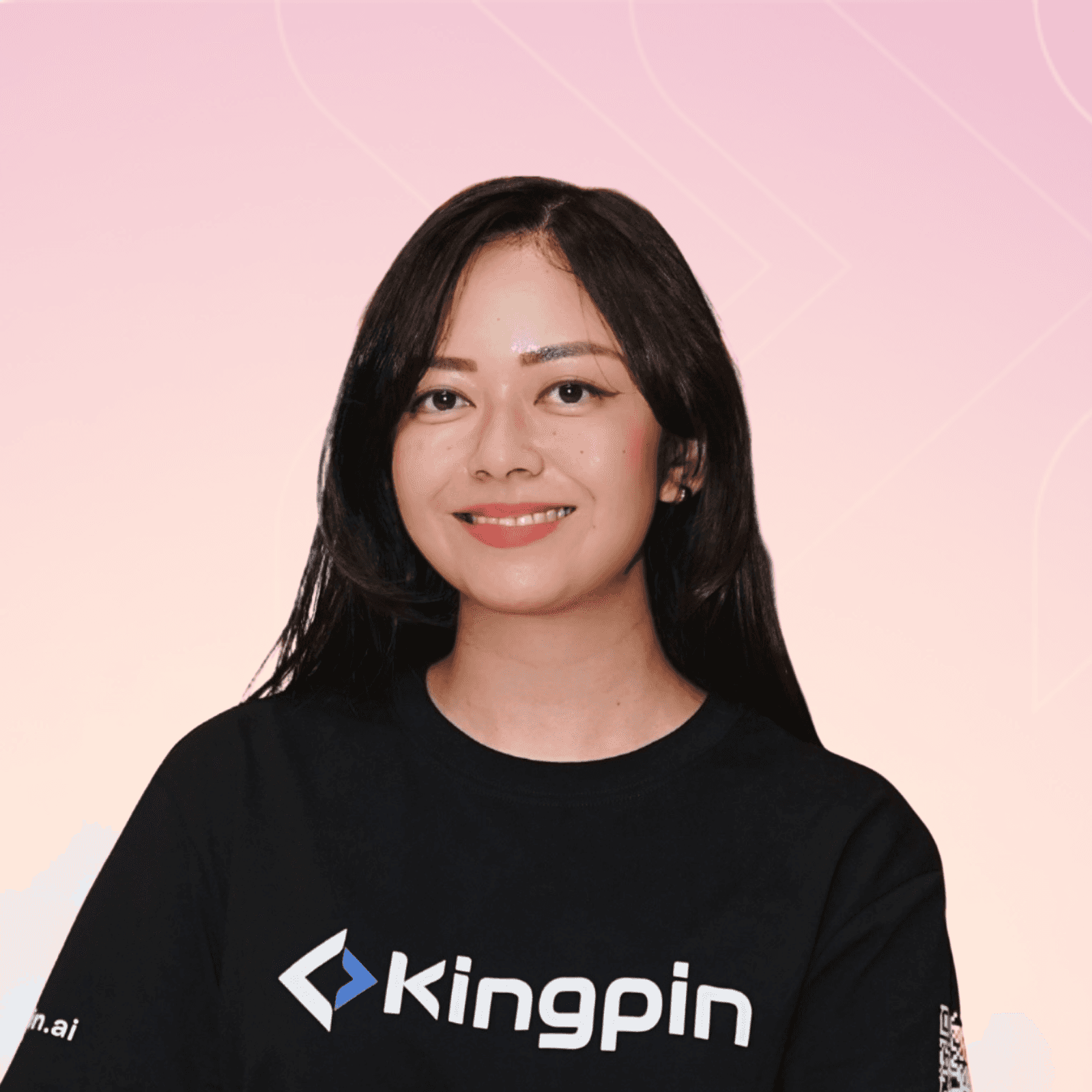
Ysabella Louise
Hi, I'm Ysabella, PMM at Kingpin. We believe that growing revenue shouldn't be a challenge, it should be a no-brainer. So sales teams can focus less on the struggle and more on the wins. I'm here to make sure that vision comes through in every story we tell, and to share what's working, what's changing, and what you should actually know to sell smarter.